
Nuggets of Wisdom
“I cannot remember the books I’ve read any more than the meals I have eaten; even so, they have made me.”
Ralph Waldo Emerson
Whilst there’s a very limited benefit in living a life primarily through books, Ralph Waldo Emerson was right. Books make people. They don’t replace life and lived experience, rather, they aid our understanding of the world around us and our place in it.
Like Emerson, I can’t remember all of the books that I’ve read and certainly not all of the knowledge that they contained. However, I’ve written down every book I’ve read since the beginning of 2001. I’ve nearly two decades of information to contemplate. From this list I can clearly see that there’s been a number that have stood out in terms of lessons learned. Non-fiction books that have altered my view of the world.
For the last couple of thousand years, the worlds greatest thinkers have committed their thoughts to paper. Their discoveries and opinions are ours if we want them. The ideas contained within these pages really have the power to change the world, be it the bible or Mein Kampf.
For me, there’s been nothing so profound. No religious awakening or the like. Instead, it has been a series of smaller revelations, some contradicting or replacing earlier ideas. Mostly it hasn’t been a big change. Just a specific bit of wisdom that has remained with me for years.
Here I’ve tried to share the single most important or useful snippet from each of these books. Of course, there’s so much more to be learned by reading the full text. So think of this as a starting point and appreciate that it’s an eclectic mix of books from the last thirty years.
Watch My Back – Geoff Thompson
I was around twenty when I first took a serious interest in martial arts. This was before the UFC, before anyone had coined the term MMA. My interest wasn’t in sport anyway. It was the self-defence aspect that intrigued me.
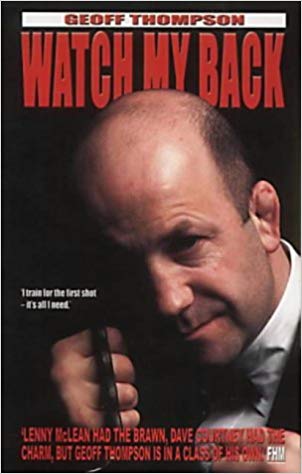
There was a local, small martial arts shop that stocked a few books. Mostly dubious kung-fu titles that, even to me as a novice, seemed to offer very little that would help in a street fight. One title stood out though. It was the autobiography of a bouncer who claimed to have had over 300 such fights.
The book had a profound effect on me, initially because of the candid nature of the author’s discussion of violence. Unlike memoirs by gangsters, this felt authentic. The stories rang true. And importantly, the writer wasn’t boasting. Indeed, it was an incident where he thought that he’d seriously hurt, or even killed someone, that forced Thompson to rethink his life.
After a couple of years boxing, when I was looking to expand my skillset, I ended up training under John Atkin who had himself studied under Geoff Thompson. By then Thompson had helped found the British Combat Association and several years later I’d get my BCA Black Belt through John’s gym.
The style taught by the BCA was very much self-defence and street orientated and involved what was unique at the time – mixing a variety of martial arts. Taking the best from each to create a coherent style that limited your vulnerabilities. What Geoff was also a master of, and what John passed on, was the knowledge of reading potentially violent situations.
The biggest lesson I learned from Geoff’s book:
Violence is rarely spontaneous. There’s usually a trigger and an escalation. It’s surprisingly easy to avoid if you’re practising situational awareness and responding appropriately.

The Vision of Nietzsche – Philip Novak
Only a few years before I picked up Nietzsche I’d have made a point of avoiding him. However, I’ve made an effort to read outside of my comfort zone and in this case, I was rewarded. He’s not an easy philosopher to read so I started with a manageable introduction.
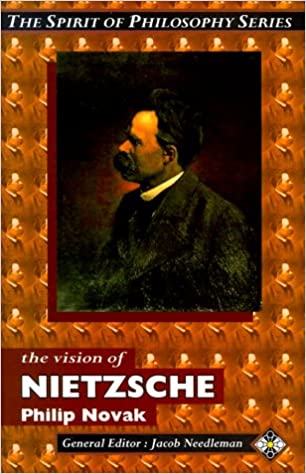
There’s a lot to take away from Nietzsche but one of the first ideas of his that I liked was the concept of Eternal Recurrence. Essentially a thought experiment, Nietzsche asks the question:
“How well disposed would a person have to become to himself and to life to crave nothing more fervently than the infinite repetition, without alteration, of each and every moment?”
The lesson I learned from Nietzsche?
If at the end of your life, you died and were reborn to live the same exact life again – would you be happy? If not, why are you living that life now?
Religion and the Rebel – Colin Wilson
Colin Wilson was a strange character. He was a working-class lad who wrote his first book while sleeping rough on Hamstead Heath, only to be catapulted into literary stardom with the publication of The Outsider – his study of a number of troubled cultural figures including Van Gogh and T. E. Lawrence.
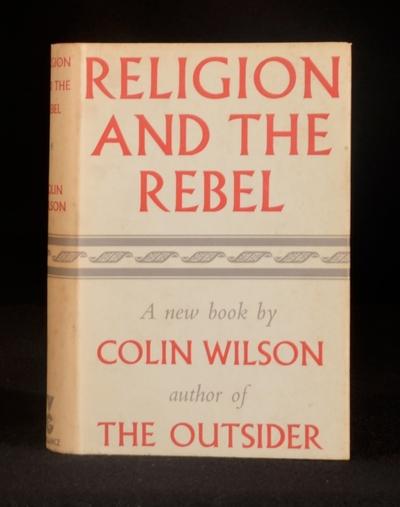
His second book, Religion and the Rebel was universally panned and Wilson was never really accepted back into the literary world, not that he ever forgave them for the rejection either. Wilson is impossible to summarise as he wrote over one hundred books including philosophy, true crime, the occult and a number of different genres of fiction. There’s a wealth of wisdom to be found in his body of work.
Wilson, despite being a very well educated man, placed major importance on the spiritual and was sceptical of the rational and logical. He was an individualist who was obsessed with his passions and drawn to others obsessed with theirs. He placed as much emphasis on the writer as the words they’d written. As he said:
“Do not ask whether the philosophy is true; look at the philosopher and ask whether he is great”.
My takeaway from Religion and the Rebel?
You can’t really separate the person from their ideas. Always weigh a persons words against their actions.
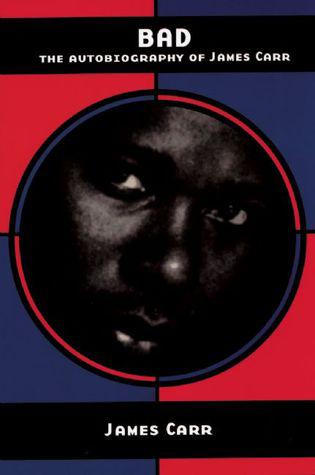
Bad – James Carr
Like most books that made an impression on me, there’s a story behind how I came across this one.
When I was a bookseller I had a friend who worked at a publisher. I’d pop to see him every couple of months and pick up a bunch of remaindered titles that he had lying about. While it lasted it was thrilling. I’d be left alone in a warehouse, faced with piles of unsorted boxes. My job was to spend a day rummaging through them looking for books I’d like to buy for the flat rate of £1 each.
One time I discovered a box filled with copies of a Roky Erikson biography, on another visit the highlight was 20 copies of a Banksy title.
This book was billed as the autobiography of a Black Panther and political prisoner. The story of a revolutionary, fighting an unjust and racist system. In fact, it turned out to be a sickening account of the authors years of criminal activity.
Two examples have always stuck with me. The first was an incident he described and which appeared to be something he’d done more than once. Carr spoke of attending parties and befriending a young woman inside. He’d then invite her outside to take a walk and smoke a joint. His friends would be waiting around the corner and together they’d kidnap and rape the woman.
The second was his admission that in jail he’d repeatedly raped a vulnerable prisoner until the other man took his own life. He showed absolutely no remorse.
Towards the end of the book, there was some mention that he then joined the Black Panthers and became politically active, but by that point, it was meaningless to me.
The lesson?
Some people will excuse any behaviour if they believe that the perpetrator is on the same side as them.
Social Sciences as Sourcery – Stanislav Andreski
This interesting book was passed to me by a friend. The concept is pretty straight-forward. It’s a stinging critique of the Social Sciences, written by a Social Scientist. What Andreski does is methodically pick apart the core ideas of Sociology and the other ‘soft sciences’. As a Sociology graduate, I found this fascinating.
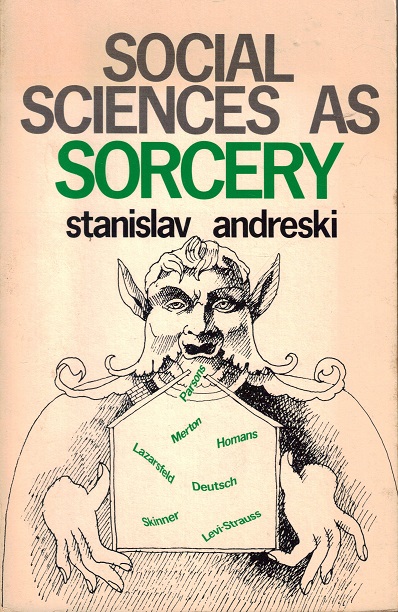
There was one particular method that he used to make his point that I enjoyed. He took specific paragraphs from the works of academics and translated them into more simple language. He took what appeared to be complex ideas, the type that the common man is told he’d struggle to understand, and worked through the text, word for word and line by line. The results were entertaining. Often the passages were literally meaningless or explained what were very basic concepts.
The major point I’ve remembered from this book is relatively simple.
Weak ideas are often camouflaged with difficult and deliberately verbose language. They’re written like that precisely because the author doesn’t want you to understand him.

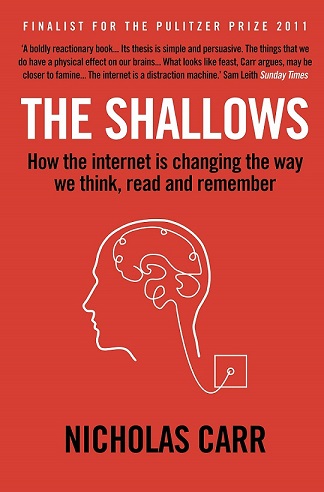
The Shallows – Nicolas Carr
The subtitle is a perfect summary of this book’s contents. How the internet is changing the way we think, read and remember.
The Shallows explains the science behind the subtle changes that the internet has had on how we process information. It’s easy, and convenient, to assume that reading on the internet is the same as reading a book.
Why would reading a passage on a laptop screen be different than reading the same text in a book?
Whilst this book takes a look at history and the recording of knowledge, a large part has to do with neuroplasticity – the ability our brain has to continuously adapt to change by rewiring itself.
Carr doesn’t argue against the internet, technology or screens. What he does is demonstrate how the internet doesn’t work in the same way as previous mediums. In a nutshell, we process the information differently when online. This is due in part to the inclusion of adverts, hyperlinks and images. Each, for just a split second, distracts from the text. Thus meaning online reading tends not to be deep. It’s a shallow experience.
The lesson is clear. Too much time on the internet rewires your brain to process information less deeply.
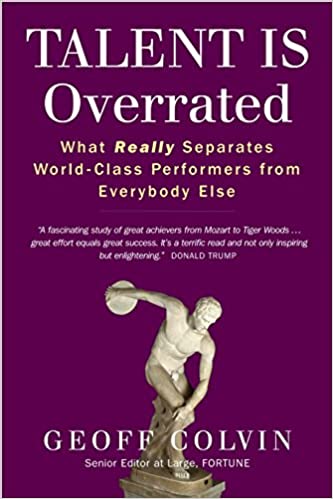
Talent is Overrated – Geoff Colvin
As my brother is keen to point out, I often read books that tell me what I want to hear.
I’ve always been a bit sceptical about the idea of natural talent. Of course, some people are naturally better at particular tasks than others. The worlds strongest man will never be 5ft2” and eleven stone. Intelligence is always going to correlate in some way to success.
Yet, I’ve always known that there’s more needed for success than just talent. As the years pass the more apparent that has become. I’ve chopped and changed jobs and interests and see friends now reaping the rewards of staying in one occupation for thirty years. So much of their current success stems from pure hard work and the willingness to stick to a long-term strategy.
Colvin uses some memorable examples of people said to have a god-given ability. Tiger Woods and Mozart stuck with me. Woods had a father who was a golf coach who bought Tiger a set of clubs before he could walk. By the time the world heard of this phenom, he’d already spent nearly fifteen years dedicating his whole life to golf, with the addition of long term professional coaching.
Mozart had a similar upbringing. His father was a music coach who trained his son from birth to compose music. Additionally, Mozart had Johan Bach as his personal tutor. Even then, he was 21 before he wrote his first classic piece.
Colvins argument is that hard work, under the guidance of a coach, trumps natural ability over the long term. If you teach two people how to play chess the smarter one will improve the quickest. If you revisit them in a decade, the best player will be the one who worked hardest to get good at the game.
The lesson: Talent is overrated. Focused hard work isn’t.
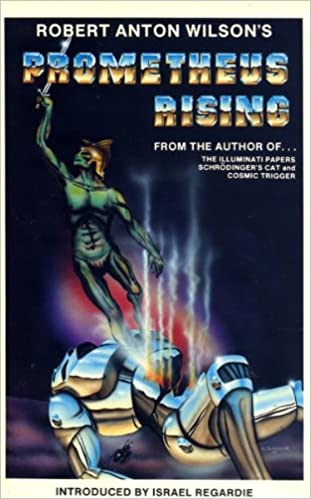
Prometheus Rising – Robert Anton Wilson
Where to begin with Robert Anton Wilson? He was a former Playboy editor who wrote both fiction and non-fiction on varied subjects. His Illuminartis trilogy is described as exploring themes that include “occult and magical symbolism and history, the counterculture of the 1960s, secret societies, data concerning author H.P. Lovecraft and author and occultist Aleister Crowley, and American paranoia about conspiracies and conspiracy theories”.
So I tend to take his word with a pinch of salt.
Prometheus Rising is a strange book. Again, the Wikipedia editors have summarised it up better than I could. It’s “an amalgam of Timothy Leary’s 8-circuit model of consciousness, Gurdjieff’s self-observation exercises, Alfred Korzybski’s general semantics, Aleister Crowley’s magical theorems, Sociobiology, Yoga, relativity, and quantum mechanics”.
A lot of it went over my head.
One of the end of chapter tasks did stick with me though. Wilson offers this little experiment. When speaking with someone, ask yourself this. If it came to a fight, who would win? Once you have the answer, ask yourself this next question. Is your conversation with this person unconsciously influenced by fear and intimidation?
12 Rules for Life – Jordan Peterson
It seemed for a while that you could not connect to the internet with seeing Jordan Peterson. He rose from obscure academic to best-selling author in a very short period of time. Very much acting as an antidote to censorship in academia and the media as well as a surrogate father figure for young men.
His ability to tackle a variety of subjects and his willingness to field questions means he can be a little hit and miss with his advice. In book form, however, he’s pretty tight. 12 Rules for life is just what it says. His wisdom packaged into twelve easily digested points.
He begins each point with light-hearted title. For example, stand up straight with your shoulders back or treat yourself like you would someone you are responsible for helping. But he expands on each with in-depth and serious research. So for the latter title, he’s referring to the fact that people are more likely to give their pets correct medical treatment than they are themselves. We all know the parents who would hate their children to smoke but do so themselves. Peterson urges us to treat ourselves as well as we care for others.
The lesson I found the most valuable is from the rule, set your house in perfect order before you criticise the world.
The world’s a complex place and how it works isn’t just the product of guesswork – it’s the result of generations of applied wisdom. Peterson suggests that if you’re unhappy with the world around you, the easiest and most profound way to alter it is to change yourself.
My takeaway? The second part to this point is that because the world is that complex entity, any changes that people force through have a real and high chance of making things worse. Just because something isn’t perfect, don’t assume that you, with limited knowledge, can change it for the better. The reality is that you’ll break things. Start by fixing your own life.
Science and Spiritual Practices – Rupert Sheldrake
I’ve softened my view of religion over the years and this book has clarified a few major points for me. Sheldrake attempts to show that many spiritual practices can be verified as beneficial through scientific studies. What’s more, he argues that most of these practices tend to be universal to all the worlds major religions.
We’re now proving that meditation, for example, has tangible and measurable benefits for practitioners. This book explains that all religions have some form of meditation and followers have known of these benefits for thousands of years. The argument in this book isn’t whether or not God exists, but rather, it shows that religious practices work. They extend life expectancy and increases our happiness and sense of community. The author suggests we could all follow these practices in a secular environment and still benefit.
Lesson. The main idea I took away from this work wasn’t a one expressed by the author. I concluded that if all societies over all of history were religious and it’s beneficial for the individual, then religion is probably hardwired in us.